Collecting your samples
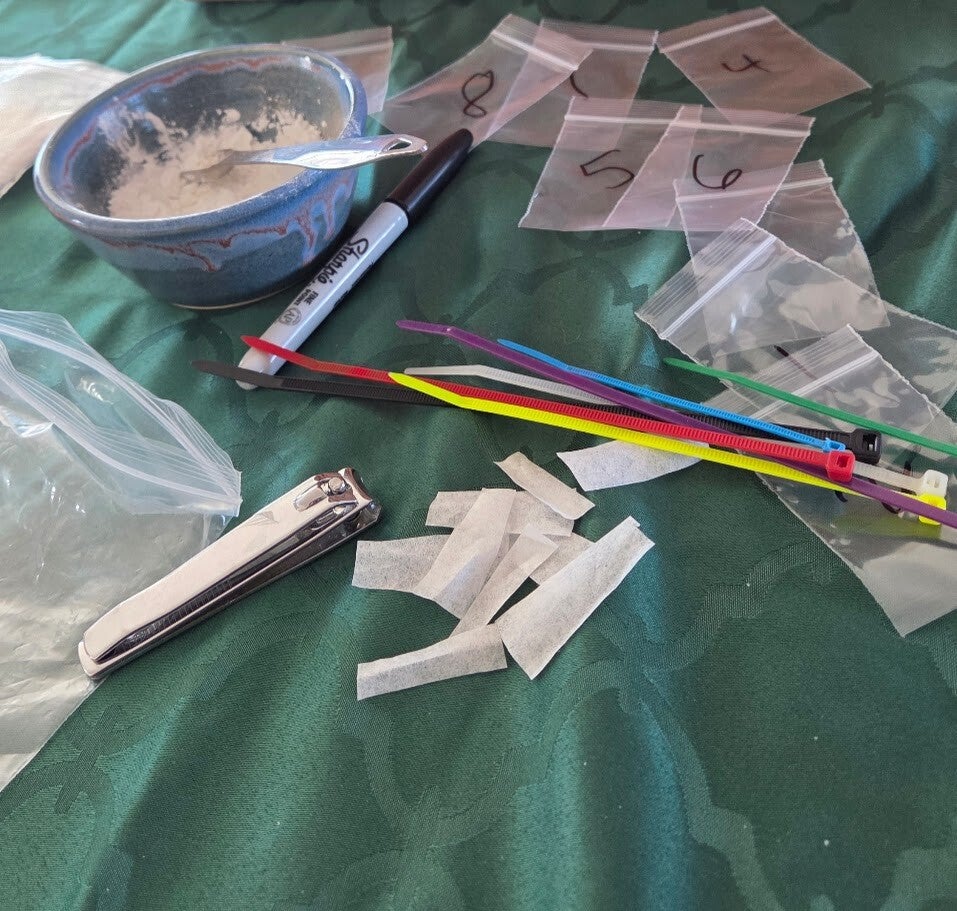
Gather your tools
You will need:
- Alcohol wipes
- Toe nail clipper
- Bands (to identify each bird-you keep track of which sample belongs to which bird)
- Triangle-shaped coffee filter collection paper
- Small plastic baggies
- Large plastic baggie to put the small baggies into
- Permanate marker to mark the lable # (this is not the band #, be sure to cross-reference the band # to bag # for your records)
- Cornstarch to stop any bleeding
Avoid cross-contamination
The single most important thing to remember when collecting poultry DNA samples is to avoid cross-contamination. This ensures the integrity of your test results. Clean the chick's toenail with a alcohol wipe and let it dry before snipping to gather the blood drops. Clean the nail clippers the same way between each sample taken and clean your fingers also. Place each sample in its own, individual plastic baggie. Clearly label each baggie with a unique number (e.g., #1, #2, #3, etc.).
Welcome to the Runyans Roost Poultry Lab sample collection guide. Please follow these instructions carefully to ensure accurate and reliable DNA testing results. Proper sample collection is crucial for the success of your poultry DNA testing. We're here to help you through every step of the process.
How to collect the blood sample
- All samples must be numbered directly with the corresponding SAMPLE NUMBER (1,2,3…etc.). NOT the BandID.
- Each sample must be in an individual baggie to avoid cross contamination. Then, place the baggies into a large baggie for shipment. Be sure the blood is dry before placing in baggie.
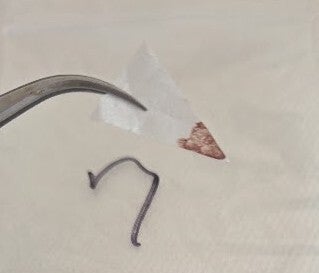
- Use a new alcohol wipe in-between each bird to first clean the toenail thoroughly and the clippers. The smallest amount of blood can cross contaminate. One super shallow trim at the tip of the nail quick and a gentile squeeze to get one small drop out is enough. If you can see it we can process it. This minimizes excessive bleeding, cross contamination, and makes processing easier.
🩸We accept the following sample types:
- A pencil thin strip of Coffee filter or Paper with a drop of blood on one tip and sample number on the other. Coffee Filters work the best! White or bleached or brown - all work.
Or
- One SMALL drop of blood the size of this “0” in the inner lid of a 0.2 ml PCR tube. Too much blood causes problems less is more. Avoid holding tubes by the lid to avoid cross contamination. Only touch outside of the lid to close.
Ready to send your samples?
Once you've collected your samples, please review our Shipping Instructions page for guidance on how to properly package and ship your samples to
Runyans Roost Poultry Lab. If you have any questions or concerns, please don't hesitate to contact us. We're here to help!